The paper decides, not the pen
The question of which markers to use for an adult coloring book has one answer that trumps all others: it depends on the paper. Choose the wrong book, and even the best alcohol marker will result in frustrated fumbling instead of relaxation.
What each colorant requires — and where it falls short on lightweight paper.
Three colorants compared
- Colored pencils: Work on virtually any paper weight. They create smooth transitions and are easy to correct—ideal for a controlled, smooth result.
- Water-based markers: They are vibrant and blend easily, but absorb quickly into paper under 140 gsm. They perform exceptionally well on heavier paper.
- Alcohol markers: Brands like Copic, Ohuhu, or Winsor & Newton deliver smooth color fields and rich saturation. They are demanding: on thin paper, they extend directly to the next page. The lower limit for reliable use is 160 gsm; 200 gsm offers the most flexibility.
In a separate comparison, we’ll delve deeper into the exact difference between 100 and 200 gsm paper and what that means for each colorant.
Vini: The Quiet Escape — built for alcohol markers
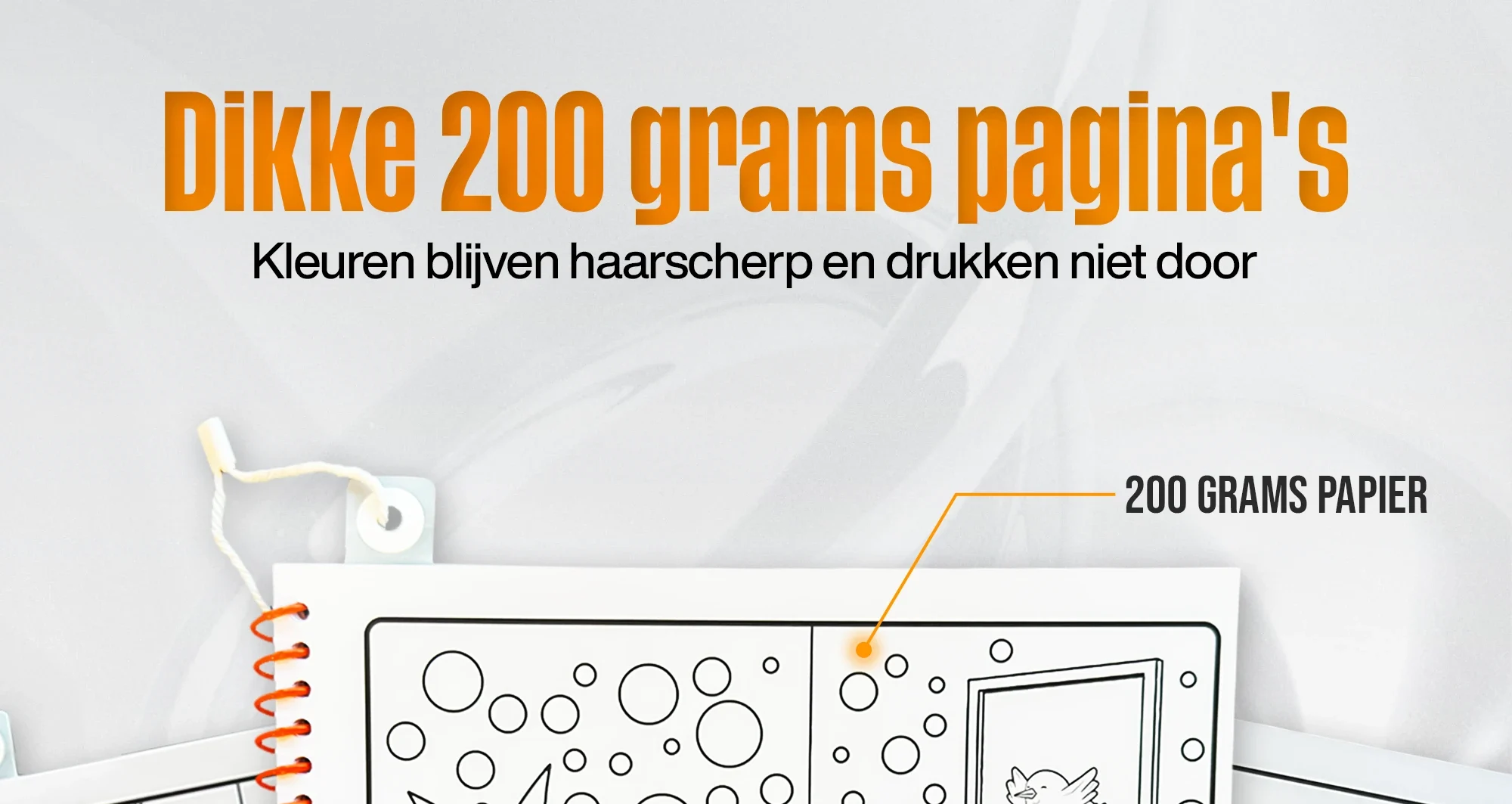
Minar Ease designed this spiral-bound coloring book specifically for the needs of alcohol markers. This design choice is reflected in every material: 200 gsm inner pages that absorb multiple layers of marker without bleed-through, single-page printed illustrations so the back remains pristine, and a protective interleaf with a reinforced snap-lock for intensive marker use.
Colored pencils and water-based markers work equally well on this paper weight. But if you want to color with alcohol markers without compromise, you’ll need 200 gsm.
Which colorant, which effect?
- Soft, layered look → colored pencil
- Deep, even color areas → alcohol markers
- Sharp details and contour work → fineliner or brush pen
- Combined technique → pencil as base, alcohol marker as finish
A practical observation
When comparing bleed-through on paper weights from 90 to 200 gsm, it was found that even budget-friendly alcohol markers from brands like Ohuhu hardly bleed on 200 gsm. At 120 gsm, bleed-through was visible after two to three coats. This isn’t a brand-specific issue—it’s a characteristic of the paper’s structure.
Users switching from lighter coloring books consistently cite the absence of color bleed-through as the most noticeable difference.
Frequently Asked Questions
Which markers are best for an adult coloring book?
That depends on the desired effect. Alcohol markers produce the most vibrant colors and smoothest transitions, but require paper of 160–200 gsm. Colored pencils are more versatile and work with any weight.
Can I use Copic markers in a premium adult coloring book?
Yes, provided the paper is at least 160 gsm. Vini: The Quiet Escape has 200 gsm inner pages and is specifically designed for Copic and similar alcohol markers.
What’s the difference between alcohol markers and water-based markers?
Alcohol markers dry faster, blend better, and produce saturated colors. They are more demanding on paper. Water-based markers are more accessible but have a drier finish.
How do I prevent color bleeding in a marker-proof coloring book?
Choose paper of at least 160 gsm, preferably 200 gsm. Use an interleaf and build up color in thin layers.
Are expensive markers necessary?
Not necessarily. The paper thickness has a greater impact on the final result than the marker’s price. Budget brands like Ohuhu perform well on 200 gsm paper.